
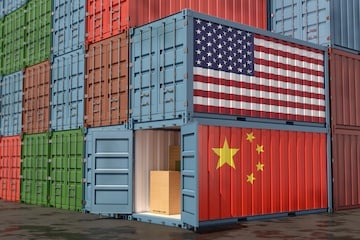
The aim of the 1930 U.S. Tariff Act was to eliminate low-cost imports from customs and duty processing, thereby saving money. Initially pegged at $1 per package, the so-called “de minimis” threshold gradually increased to $800. The exemption became crucial for cross-border dropshippers, fast-fashion brands, and other ecommerce sellers.
President Trump eliminated the de minimis exemption effective August 29, 2025. Most U.S.-bound shipments valued at $800 or less will incur applicable duties, taxes, fees, and other charges, although the change affected packages from China and Hong Kong as of May. And the U.S. Postal Service, in collaboration with other domestic postal providers, has a six-month transition period.
President Trump eliminated the de minimis exemption effective August 29, 2025, although the change took effect in May for China and Hong Kong.
Nonetheless, the change represents a dramatic shift for ecommerce. For nearly a decade, cross-border sellers and platforms such as Shein and Temu leaned on the exemption to flood the U.S. with low-value packages.
Meanwhile, American retailers shipping to other countries paid tariffs, hired brokers, and navigated customs compliance. Now, with the exemption gone, the playing field looks different.
Some businesses will suffer due to import complexities and expenses, but others stand to gain.
Scope
The American de minimis rule had been unprecedented. Many countries have similar exemptions for relatively low-value imports, but none come close to an $800 ceiling.
European Union nations typically cap their customs duty at the equivalent of $175, but charge a value-added tax from the first penny. Canada’s exemptions for customs duties and taxes max out at $150 CAD, or approximately $100 USD. Mexico allows shipments of up to $50 USD for a de minimis value. China offers minimal exemptions, and most other countries peak at about $75.
America’s high exemption created an opportunity for foreign ecommerce businesses and some enterprising U.S.-based merchants.
According to the White House, the volume of shipments entering the U.S. duty-free rose from approximately 134 million packages in 2015 (when the limit was $200) to more than 1.36 billion last year.
An estimated 60% of these de minimis, duty-free packages entering the U.S. — hundreds of millions of parcels annually — originate from China.
Harm
The U.S. de minimis suspension will hurt three types of ecommerce companies:
- Dropshippers. Merchants that manufacture, warehouse, or acquire products offshore for direct, per-item importing will now have to pay standard duty and taxes. This group includes large sellers, such as Temu, as well as many small and retail arbitrage businesses utilizing AliExpress and DSers.
- Fast-fashion sellers. China’s Shein and similar brands that depend on producing rapidly trendy clothes could face relatively higher landed costs and, as a result, thinner margins.
- Small ecommerce retailers. The de minimis exemption applied to both direct-to-consumer sales and bulk orders so long as the total value was $800 or less. Thus merchants that place tiny minimum orders from suppliers could also be impacted.
The suspension does not prevent any of these businesses from operating or shipping to the United States, but it does change their economics and presumably increase prices for consumers on goods that were previously duty-free.
Benefit
The suspension is not universally harmful, however, as many American businesses stand to gain.
First and foremost, the suspension could be a boon for merchants and brands that source products in America. This is particularly true for small direct-to-consumer businesses that pay U.S. wages while competing with goods manufactured offshore in markets with extremely low labor costs.
The second group to benefit could be every domestic retailer that already pays import duties.
A retail chain with 15 stores, an ecommerce website, and a requisite marketplace seller account is already paying standard import duties when importing a container load of goods.
In some cases, these retailers had to compete with foreign sellers or arbitrage operations that could offer an identical item at a lower cost due to the de minimis exemption.
Outlook
President Trump suspended the de minimis treatment discussed here on July 30, 2025, by executive order; however, he might change his mind.
The Trump administration often uses trade policy as a form of leverage. If foreign governments such as China make concessions to the United States, the administration could restore or modify the exemption.
Regardless, the de minimis treatment would have ended permanently in 2027. Earlier this year, the U.S. Congress voted to kill the exemption for the vast majority of small imports. The new law appears to aim to close what lawmakers believed was a loophole that has harmed American manufacturers and consumers while benefiting drug traffickers.
The suspension is disruptive for some ecommerce sellers. Yet the industry has adapted before, through sales tax implementations, shipping disruptions, and pandemic-era supply chain crises. It will adapt again.
What began as a convenience rule in the 1930s grew into a key component of global ecommerce. The end of the de minimis exemption may mark the start of something new and promising for American ecommerce businesses.