
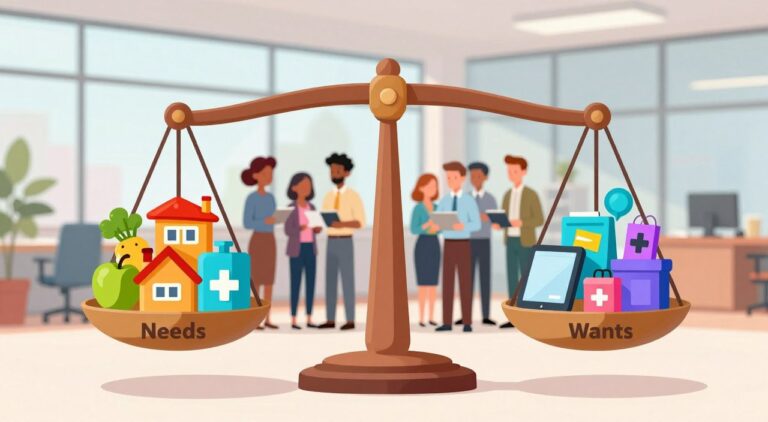
Understanding what truly belongs in the essentials column is the first move toward steady financial health. This short guide shows how to sort needs from wants, so monthly spending matches goals and income.
They will learn to list regular expenses, set aside an emergency fund, and carve out room for a few enjoyable things. A clear plan helps cover basics while leaving space for small treats that improve life.
Subscribing to the NerdWallet newsletter can save time and offer weekly tips that simplify tough money headlines. Those updates help readers prioritize expenses each month and stay ready for unexpected costs.
With steady rules anyone can tailor a budget to their income and goals. The result is less stress, smarter spending, and more control over future choices.
Defining Needs vs Wants in Budgeting
Telling apart essential bills from optional purchases clears the path to smarter monthly planning.
Personal budgets usually split expenses into two broad categories: items required to maintain life and items chosen for comfort. This basic split supports steady financial health and clearer spending choices.
- Distinguishing needs and wants helps people decide daily spending and long-term goals.
- A need keeps someone safe and housed, such as food or rent; a want adds enjoyment to life.
- Keeping a list of purchases shows what money covers each month and highlights waste.
- For example, a used car may meet a need better than a brand-new model that strains income.
When expenses are categorized, it is easier to prioritize income toward essentials first. This approach reduces financial stress and lets discretionary purchases fit only after core costs are met.
Identifying Essential Expenses
Sort out recurring charges and basic living costs first to see what income truly covers. Doing this shows which payments must come off the top of a monthly plan.
Fixed Expenses
Fixed costs are steady each month. Examples include rent or mortgage, loan payments, and a yearly car insurance bill averaged into a monthly amount — $1,800 a year equals about $150 a month.
These predictable charges make the core of any budget. They help a person set aside the correct amount before other spending.
Variable Necessities
Variable needs change from week to week. Gas for transportation, utilities, groceries, and basic clothing fall here. Tracking these helps prevent surprises.
If utilities or food costs spike, reviewing the plan can free up money to cover shortfalls. Tools like the TD Unlimited Chequing Account can simplify daily transactions and help manage cash flow for essentials.
| Category | Typical Items | Sample Monthly Amount |
|---|---|---|
| Fixed | Housing, insurance, loan payments | $1,200–$1,800 |
| Variable | Groceries, gas, utilities | $300–$600 |
| Work-related | Transportation, job supplies | $50–$300 |
Recognizing Discretionary Spending
Small splurges can quietly add up and reshape a monthly plan if they go unchecked. Discretionary spending covers wants that boost daily life, such as dining out, entertainment, and weekend trips.
Questions to Ask Before Purchasing
Ask if the item is required for basic care or if it is a personal treat that can wait. A new coat is a need when it replaces worn outerwear, but it becomes a want if there are already several warm coats.
Consider the consequences of not buying right away. If skipping a purchase does not affect safety, job performance, or insurance coverage, it may be discretionary.
- Track spending to see which categories eat most income.
- If no emergency fund exists, prioritize saving over luxury subscriptions.
- Transportation for a job, like a basic car, is a true need; a luxury vehicle is often a want.
| Example | Typical Cost | Decision Tip |
|---|---|---|
| Shirt | $45 | Delay if not needed this week |
| Shoes | $150 | Compare to current items before buying |
| Streaming service | $12/month | Cancel if saving for emergency fund |
Strategies for Balancing Your Monthly Income
Allocating money with purpose turns erratic spending into steady progress toward financial goals.
Start by funding needs first, then set aside an amount for wants, and put the rest toward savings and debt. A reverse budget can help: pay savings and debt before discretionary buys.
- Trim costs on necessities by comparing insurance and subscription rates.
- Set a fixed cap for variable expenses and track it weekly.
- Build an emergency fund to shield income and keep small wants from derailing plans.
- Review the budget each month and adjust amounts to match changing goals.
| Category | Example % | Use |
|---|---|---|
| Needs | 50% | Housing, utilities, core bills |
| Savings & Debt | 30% | Emergency fund, debt paydown |
| Wants | 20% | Dining, hobbies, small treats |
By keeping these steps, a person gains more control over monthly income and protects long-term targets like retirement. Regular checks keep money working toward primary goals.
Common Budgeting Frameworks
Simple frameworks can make it clear how each dollar should be used every month. They help people decide which expenses get priority and which purchases can wait.
The Fifty Thirty Twenty Rule
The 50/30/20 split guides monthly income allocation: 50% for needs, 30% for wants, and 20% for savings and debt. This method keeps fixed expenses like insurance and car payments covered first.
It is an easy example for someone building an emergency fund or saving for retirement.
Envelope Budgeting
Envelope budgeting assigns a set amount to each category such as groceries, utilities, and transportation. Using an app like Goodbudget lets users manage envelopes virtually without cash.
This way helps to track spending and stop overspending on small services or treats.
Zero Based Planning
Zero based planning requires assigning every dollar a purpose until the balance is zero. That means each amount is mapped to bills, savings, or specific purchases.
It offers tight control over money, so goals and debt paydown get priority each day and month.
| Framework | How It Works | Best For |
|---|---|---|
| 50/30/20 | Split income: 50% needs / 30% wants / 20% savings & debt | Beginners and steady paychecks |
| Envelope (Goodbudget) | Allocate fixed amounts to categories like groceries, utilities, transportation | People who want hands-on control of variable expenses |
| Zero Based | Assign every dollar a job until the monthly plan hits zero | Those focused on aggressive savings, debt, or precise planning |
Conclusion
Small, consistent choices about purchases compound into major gains for savings and debt reduction. Recognizing the difference between needs and wants makes it easier to steer cash toward what matters most.
By using a clear budget method, someone can ensure income covers essentials while leaving room for modest treats. Regularly review the plan and adjust amounts when circumstances change.
Cutting back on unnecessary wants frees money to lower debt or boost retirement and emergency savings. Taking control of spending supports today’s lifestyle and the long-term goals people aim to reach.