
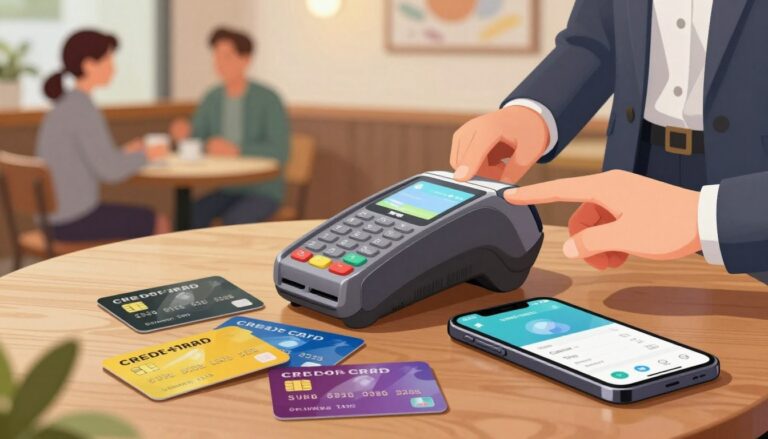
This introduction maps the essentials for anyone new to modern digital transactions. It explains key ways to handle a card-based purchase and how the chosen payment method affects an account balance and fees.
Small business owners will find clear, practical info on rewards, debit features, and transaction steps. The guide shows how a reliable provider can simplify record keeping and manage charges over time.
By 2029, card use could reach about 1.1 trillion transactions a year, up from 776 billion in 2024. This section sets the stage so readers can learn the right method to process payments, protect money, and keep accurate records.
Understanding Credit Card Payment Methods
Knowing the steps behind a typical card purchase helps a business control fees and reconcile accounts. A merchant sees different rates depending on the type of card and the chosen processing route.
Interchange fees are set by networks such as Visa and Mastercard. Those fees go to the bank that issued the consumer’s card. Processing costs and any provider charges are added on top.
- A credit card lets a buyer make purchases on credit; a debit option draws funds from a linked bank account.
- Premium cards that offer high rewards often trigger higher rates for the merchant.
- Every transaction sends authorization and settlement information among merchant, network, and issuing bank.
- Track each transaction to keep the account balance accurate and reconcile amounts with your provider.
| Aspect | Typical Outcome | Why it matters |
|---|---|---|
| Standard credit card | Lower interchange rate | Reduces fees for most purchases |
| Premium rewards card | Higher interchange rate | Raises merchant charges on high-value purchases |
| Debit via bank account | Direct withdrawal | Often lower cost and faster settlement |
Common Types of Digital and Physical Transactions
Modern sales occur across phones, websites, and terminals, so understanding common transaction types helps operations run smoothly.
Digital Wallets
Digital wallets like Apple Pay and Google Pay speed checkout and cut manual entry time. They store multiple cards so a buyer can choose based on rewards or balance.
One-click checkout raises conversion and improves the customer experience. Every transaction via a wallet still needs monitoring so the correct money posts to the business account.
Bank Transfers and Direct Debits
Direct bank transfers and direct debits (ACH, SEPA) offer low processing fees, often around 0.5–1%. That is far less than the 2–3% commonly tied to credit card payments.
These routes work well for recurring billing. Businesses that support bank account transfers reach customers who avoid cash or don’t want to use cards.
| Type | Typical Fees | Best for |
|---|---|---|
| Digital wallets | Often same as linked card | Fast checkout, mobile purchases |
| Direct bank transfer | 0.5%–1% | Recurring billing, low-cost collections |
| In-person tap/swipe | 2%–3% | Walk-in sales, quick card payments |
Factors to Consider When Selecting Payment Options
Choosing how customers settle purchases affects cash flow, fees, and long-term revenue. Leaders should weigh speed, security, and customer expectations when they pick a mix of checkout solutions.
Aligning Methods with Your Business Model
Recurring billing needs reliable automatic routes. Subscriptions demand lower failure rates and simple retry logic to protect the account balance.
One-time in-store sales favor fast in-person taps and cash. Online stores benefit from saved profiles, wallets, and flexible checkout that match shopper habits.
- Compare per-transaction fee and dispute risk to keep costs low.
- Offer a balanced set of options so shoppers find their preferred choice without overwhelming checkout.
- Match rewards and benefits to the target demographic to boost acceptance and average order value.
| Scenario | Best Option | Why it fits |
|---|---|---|
| Recurring subscriptions | Bank transfers / saved cards | Lower long-term failure and steady settlement to the business account |
| High-value online orders | Verified online checkout | Reduced fraud risk and better dispute handling |
| Quick in-person sales | Tap or swipe terminals | Fast checkout and immediate authorization |
Setting Up Your Infrastructure for Card Acceptance
Proper infrastructure reduces disputes and speeds the route from sale to settled funds. A reliable stack combines secure software, dependable hardware, and clear operational rules. Choosing each piece carefully keeps fees predictable and funds moving into the account on time.
Online Storefront Integration
To accept a credit card payment online, integrate a secure gateway that encrypts buyer information. Use a provider that supports many payment options and has high uptime to avoid lost sales.
Stripe Payments, for example, scales with a business and supports 125+ payment methods while keeping services available nearly continuously.
In-Person Hardware Requirements
For physical locations, choose a countertop reader or a mobile terminal that meets EMV and contactless standards. Test terminals regularly so every tap or swipe authorizes correctly.
Processing Payments Over the Phone
Phone orders require manual entry of the number and expiration date. Follow PCI-compliant processes so sensitive information is never stored insecurely.
- Track every transaction to ensure correct authorization and settlement.
- Pick a provider that centralizes online, in-person, and phone processing.
- Monitor daily volumes to manage balance and reduce chargeback risk.
| Channel | Key Requirement | Why it matters |
|---|---|---|
| Online | Secure gateway, high uptime | Protects data and prevents lost orders |
| In-person | EMV/contactless terminal | Fast authorizations, lower fraud |
| Phone | PCI-compliant entry | Securely captures order details |
Managing Recurring Billing and Automatic Payments
A strong recurring billing setup cuts involuntary churn and keeps monthly revenue steady.
Automated systems let customers authorize automatic charges so a bank account or backup source is billed on schedule. When a primary method fails, smart retry logic can switch to a backup card and recover up to 30% of at-risk revenue.
Accurate account information matters. An expired credit card number or bad billing line often causes failed transactions and lost money.
- Allow customers to update their details quickly online to maintain a healthy balance.
- Use dunning sequences that notify, retry, and escalate before canceling service.
- Automate fund collection to reduce manual work and speed settlement of amounts owed.
| Area | Best Practice | Benefit |
|---|---|---|
| Failed charge handling | Automatic retries + backup source | Lower involuntary churn, faster recovery of funds |
| Customer updates | Self-serve billing portal | Fewer failed transactions, improved cash flow |
| Dunning | Tiered notices with retry schedule | Higher recovery rates and steady account balance |
Optimizing Payment Performance and Analytics
Data-driven monitoring turns daily processing logs into actions that grow revenue.
Key Metrics for Revenue Growth
Revenue operations should track authorization rates, retry success, and lifetime value by method. These metrics show which routes win and which need work.
Teams can use provider dashboards to break down costs, rates, and the buyer experience. That visibility helps control fees and improve account balance timing.
- Authorization rate — higher rates mean more settled money and fewer manual reviews.
- Retry success — shows which cards or wallets recover failed attempts.
- Customer lifetime value by method — links processing choice to long-term revenue.
| Metric | What to watch | Action |
|---|---|---|
| Authorization rate | % of approves vs attempts | Optimize routing & tokenization |
| Retry success | Recovered transactions | Adjust retry timing & backups |
| Processing costs | Per-transaction fees | Negotiate rates or shift methods |
Navigating Regional Preferences and Global Expansion
When selling across borders, the best results come from tailoring checkout options to the region’s most trusted ways to pay.
North America still favors credit and debit cards, while many APAC markets prefer local wallets and QR-based transfers. Parts of Europe lean toward bank transfers and direct debit for recurring purchases.
Using a global provider that supports cross-border processing lets a business accept cards and local wallets in 195 countries and 135+ currencies. That reduces friction, lifts conversion, and can lower fees tied to currency conversion and failed transactions.
A flexible approach matters. Offer local options, show local currency at checkout, and test which routes improve authorizations and conversion. A smart rollout helps keep rates predictable and expands reach without adding undue risk.
| Region | Common Options | Impact on Conversions & Fees |
|---|---|---|
| North America | Credit, debit, digital wallets | High card usage; steady conversion; moderate fees |
| APAC | Local wallets, QR, cash alternatives | Wallets boost mobile sales; lower card share |
| Europe | Bank transfers, SEPA, cards | Lower per-transaction fees for transfers; strong recurring uptake |
Conclusion
This guide summarizes the core ideas needed to run smooth, cost-aware checkout operations and explains common payment methods so businesses can protect margins and reduce disputes.
By choosing the right way to accept funds and by tuning systems for recurring billing, a business can cut failures and speed settlement. Regular attention to account details, including debit handling and retries, keeps revenue steady.
The content here aims to give practical steps for selecting tools and tracking results. For a deeper look at fees that affect costs, see common fees explained. Keep reviewing your mix as customers and markets evolve.