
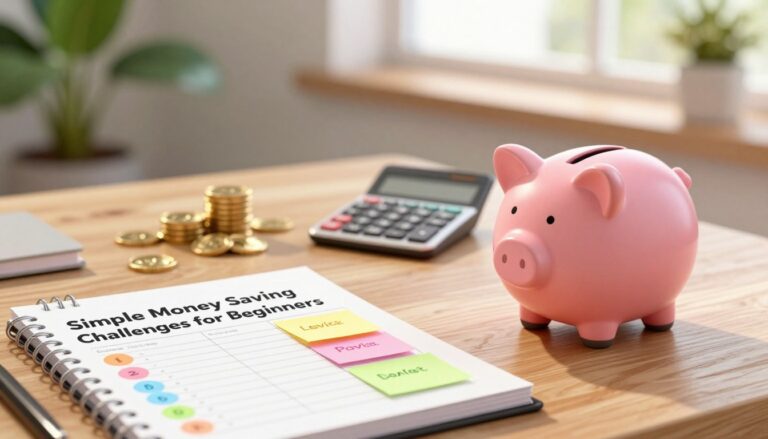
The right list can make a new financial path feel simple and clear. This guide shows easy savings ideas that build confidence and keep routines steady.
Research from US News & World Report notes many people struggle with resolutions, but a short, structured challenge helps. By setting aside a small amount each week, they can grow a savings account without major lifestyle changes.
These steps let someone track cash and account balances in plain terms. Each idea fits a day, week, or year goal and keeps the process manageable.
Beginners can pick one item from the list and start today. With consistent effort and a clear plan, anyone can turn tiny amounts into meaningful savings and better control over their account.
Why Money Saving Challenges Work for Beginners
Small, structured steps help beginners turn a vague goal into steady progress.
A savings challenge breaks a larger target into bite-sized wins that fit into busy schedules. This approach adds a light, game-like system with clear checkpoints and simple tracking.
When people follow a plan, they build good habits and limit impulsive spending. That steady attention to an account helps the balance grow over time.
- Turns a daunting goal into small, manageable tasks for a savings account.
- Gamifies the process to make the effort feel more fun and rewarding.
- Provides structure that keeps focus on money and long-term goals.
| Benefit | What it Does | Beginner Result |
|---|---|---|
| Small Steps | Breaks goals into daily or weekly actions | Reduces pressure and improves consistency |
| Tracking | Shows progress in an account or chart | Limits impulsive spending and keeps momentum |
| Game Element | Uses targets, rewards, or milestones | Makes habit formation more engaging and lasting |
Time-Based Savings Challenges
Time-based plans give beginners a clear period to follow. They turn small, repeatable steps into visible progress for an account. These methods work well for people who prefer a set schedule.
The Fifty-Two Week Method
The Fifty-Two Week Method asks someone to save a set amount each week. Week 1 saves $1, week 52 saves $52. By the end of the year the total comes to $1,378, which can boost a savings account or pay down a bill.
This approach builds a habit slowly and fits most budgets. It can be adjusted if a particular week feels too large.
The Hundred Envelope Strategy
The 100-envelope method moves faster. Label envelopes from 1 to 100 and place the matching cash inside each day. In 100 days the sum reaches $5,050.
Store the envelopes at home in a container and mark progress on a chart. One example is to pick numbers at random to add a surprise element to daily deposits.
| Method | Period | Total Amount |
|---|---|---|
| Fifty-Two Week | 52 weeks | $1,378 |
| 100 Envelope | 100 days | $5,050 |
- Both options help an account grow over a fixed period.
- Beginners can get started with a pen, envelopes, and a container.
Habit-Building Money Saving Challenges
A single day without nonessential buys helps people notice where their cash slips away. Small, repeatable habits like this make it easier to grow a savings account over time.
The No Spend Day Concept
The no-spend day asks someone to avoid all non-essential purchases for one day. They pick a day or extend the period to a week or a month to fit their routine.
Plan meals and groceries ahead to avoid takeout or daily coffee runs. Track what would have been spent and move that cash into an account or envelope.
- The no-spend day reduces impulse purchases and refocuses average weekly expenses.
- Committing to this habit for a month can raise the balance in a savings account noticeably.
- Customize the period: one day a week or a full month, then review changes to spending and subscriptions.
By the end of the test period, they will better understand expenses and have a clear plan to keep more cash working toward long-term goals.
Automated Approaches to Savings
Apps that round up card purchases make steady progress feel nearly effortless.
Mobile tools like Acorns and Qoins link to a bank or debit card. They round each purchase up to the next dollar and move the small change into a savings account.
This set-and-forget option builds a habit across the year without manual transfers. It captures tiny change from every swipe and funnels it into an account that grows over time.
- Auto-round ups turn every debit transaction into a contribution to a savings account.
- Linking the app to a bank reduces missed deposits and keeps contributions consistent.
- Because transfers are automatic, people spend less time tracking and more time reaching goals.
| Feature | Acorns | Qoins |
|---|---|---|
| Round-up transfers | Yes, auto-rounds to invest or save | Yes, rounds to pay or save |
| Link to bank | Direct link to checking | Direct link to checking |
| Best for | Passive investing and saving | Debt payoff and steady deposits |
Over a year, small automated deposits can add up to a meaningful balance. For beginners, this method makes a savings challenge low-effort and reliable.
Creative Ways to Boost Your Savings
Playful, repeatable steps bring unexpected boosts to an ordinary budget over a year. These quick methods add variety and keep a savings account fresh without heavy effort.
The Birthday Wish Method
Each time someone sends a birthday greeting, they transfer a set amount to their account. A small, fixed sum per greeting adds up across weeks and months.
The Five Dollar Bill Rule
When a $5 bill comes in change, it goes straight into a jar or bank deposit. This rule nudges people toward more cash payments and lowers mindless card purchases.
The Receipt Savings Hack
Check the “Today You Saved” line on store receipts. At the end of each shopping trip, move that exact amount to the savings account.
- These methods add surprise and fun to the routine.
- Using cash for small purchases can reduce overall spending and boost the account balance.
- Keep a short list of tactics to rotate through the year for steady results.
| Method | Frequency | Typical Amount | Best For |
|---|---|---|---|
| Birthday Wish | Per greeting | $1–$5 | People who send cards or messages often |
| $5 Bill Rule | Every time $5 appears | $5 | Those who use cash regularly |
| Receipt Hack | Per purchase | Varies by receipt | Frequent shoppers who get savings listed |
Managing Your New Savings Account
Moving saved cash into a secure account helps those gains compound over time. Once a basic balance is built, choosing the right place to hold funds matters.
A high-yield savings account offers interest rates above the national average. It keeps funds accessible while helping the amount grow faster than a standard account.
Cash management accounts act like a hybrid of checking and savings. They often provide competitive rates and more flexible services for everyday payments and transfers.
- Review bank statements each month to confirm automatic transfers and payments are correct.
- Monitor debit card activity and change notifications to spot unexpected purchases.
- Confirm FDIC insurance to protect funds in a bank or eligible cash account.
| Account Type | Access | Interest | Best For |
|---|---|---|---|
| High-Yield Savings | Online transfers, limited withdrawals | Above average | Emergency funds, short-term goals |
| Cash Management | Debit card, bill pay, transfers | Competitive | Daily spending plus returns |
| Standard Savings | Branch or online access | Low | Basic reserve and account simplicity |
Keeping savings in a dedicated account prevents temptation to use that cash for non-essential purchases or services. For guidance on simple steps to manage an account, see simple money management.
Overcoming Common Obstacles
Keeping momentum through the year depends on a few simple routines. A clear plan and tiny wins make a long period feel manageable.
Staying Motivated Throughout the Year
They should remind themselves of a specific goal when interest slips. Marking off each week or day on a calendar makes progress visible.
Set small, repeatable habits and celebrate mini milestones. Even one quiet win at the end of a week helps an account grow and keeps the habit alive.
- Track progress with a simple chart or app to keep focus on goals.
- If energy drops, simplify the plan for a short period to rebuild momentum.
- Accept setbacks as part of the process and return to the routine immediately.
| Tip | How it Helps | When to Use |
|---|---|---|
| Micro-goals | Creates frequent wins that boost morale | When motivation wanes mid-year |
| Visual Tracking | Makes progress concrete for the account | Every week or month |
| Simplify the Plan | Prevents burnout and resets the habit | After a bad day or series of busy days |
Choosing the Right Challenge for Your Goals
Match a short-term target to a method you can keep up week after week.
First, define the goal and the time you have. If the aim is a quick boost in a savings account, a no-spend day or a one-week audit of subscriptions works well.
Next, review regular account activity. Look at bank statements to spot recurring payments like subscriptions, coffee runs, or extra purchases. Redirect those amounts into the account.
- Pick a plan that fits regular expenses, such as groceries and rent.
- Start small: one day of no nonessential purchases or a weekly round-up app.
- Track progress and adjust the period if the amount feels too large.
| Challenge | Best For | Time | How to Start |
|---|---|---|---|
| No-Spend Day | Reducing impulse purchases | One day to one month | Plan meals, skip coffee, move saved cash to account |
| Fifty-Two Week | Slow steady build | 52 weeks | Save increasing dollar each week into savings account |
| Round-Up App | Hands-off saving | Ongoing | Link card, enable round-ups, review monthly |
| Subscription Audit | Cut recurring waste | One week review | Cancel unused services, redirect payments to account |
Conclusion
Picking one easy routine today can change how someone treats their finances over time. Small steps build habit, and steady action makes results real.
Focus on a method that fits daily life and track progress in a simple chart or app. Use automated tools or a manual plan—either will keep the savings account growing when used consistently.
Start small, stay consistent, and accept minor setbacks as part of the process. By choosing one simple challenge and committing to it, they can gain control and create a brighter financial future.