
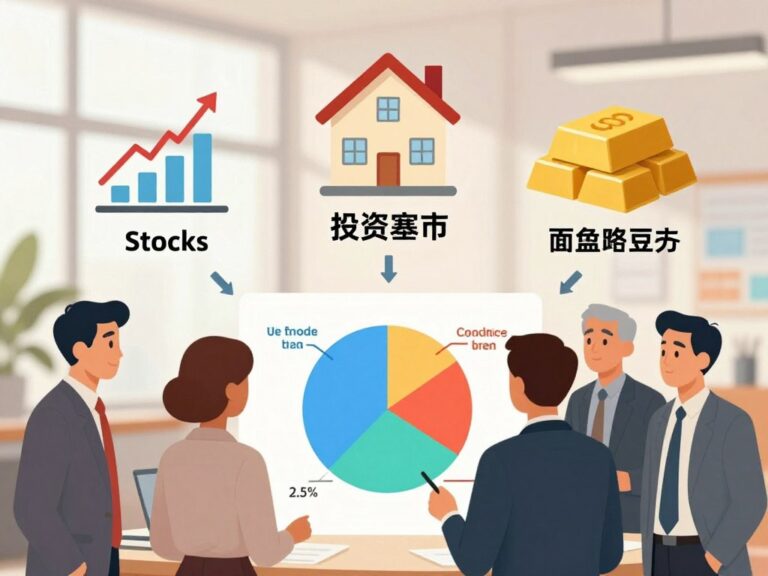
Any beginner who wants to build long-term wealth should first learn the main categories that make up a portfolio. An asset is a resource with value, like a company share or a government bond, that someone holds to seek future growth.
New investors must weigh financial goals and risk tolerance before they commit money to stocks, bonds, mutual funds, or exchange-traded funds. This helps match expected returns to personal timelines and income needs.
Diversification across asset classes reduces volatility and guards a plan against the price swings of a single company. Proper asset allocation balances equity ownership with stable, fixed-income instruments to protect savings and support growth.
This short guide gives clear information and practical ways to choose accounts and securities that fit each investor’s goals. With basic knowledge of characteristics for each type, readers can make informed choices and begin investing with confidence.
Understanding the Basics of Investing
A clear grasp of investing basics makes it easier to turn savings into steady long-term growth. A new investor who knows core principles will use money more effectively and avoid common mistakes.
An asset is any resource with economic value that you own. Asset allocation is key for building a robust, stable portfolio that balances growth and safety.
Every person must assess their risk tolerance because investments can lose value in the market. Asset classes group similar securities like stocks and bonds so investors can compare behavior and rules.
- Investing means buying assets to earn income or growth.
- Companies issue securities to raise money and offer investors participation in growth.
- Discipline and proper asset allocation protect savings over time.
| Category | Typical Risk | Typical Returns |
|---|---|---|
| Stocks | High | Higher long-term growth |
| Bonds | Moderate | Steady income |
| Cash & Equivalents | Low | Low, stable returns |
Types of Investment Assets Explained
A simple way to understand portfolios is to sort holdings by shared market and regulatory traits. This makes it easier for investors to compare risk and likely returns across categories.
Defining Asset Classes
Asset classes group investments that behave similarly in markets. Examples include stock, bonds, cash, and real estate funds. Each class has distinct characteristics that affect performance and volatility.
The Role of Diversification
Diversification spreads money across categories to reduce single-sector risk. Many investors use mutual funds to gain instant exposure to many securities in one portfolio.
- Grouping helps show total market exposure for stocks and bonds.
- Diversification lowers risk from market swings and improves long-term resilience.
- Understanding characteristics aligns investments with financial goals.
| Category | Typical Risk | Typical Returns |
|---|---|---|
| Stock | High | Higher long-term returns |
| Bonds | Moderate | Steady income |
| Cash & Funds | Low | Low, stable returns |
Core Equity and Fixed Income Securities
Understanding how stocks and bonds work helps investors manage risk and pursue returns. This section covers ownership in companies, loans that pay interest, and pooled funds that mix both. Short explanations help beginners compare characteristics and price behavior.
Understanding Stocks and Ownership
Stocks represent partial ownership in a company. When investors buy shares, they share in profits and losses tied to company performance.
The S&P 500 tracks many large companies and serves as a benchmark for equity funds. Stocks offer higher long-term returns but have more volatility.
How Bonds Function as Loans
Bonds are loans to a government or company that pay regular income. Fixed income securities like Treasury bonds are lower risk than stocks and help steady a portfolio.
Bonds reduce short-term volatility and provide predictable cash for investors who need steady money flow.
Mutual Funds and ETFs
Mutual funds and ETFs pool money from many investors to buy diverse securities. This diversification lowers single-company risk and simplifies portfolio management.
Vanguard offers commission-free online ETF trading, which can cut costs for long-term investors managing funds across accounts.
- Stocks = ownership and growth potential in companies.
- Bonds = loans that deliver income and stability.
- Funds = pooled holdings that ease diversification and reduce single-stock price risk.
| Security | Risk | Primary Benefit |
|---|---|---|
| Stocks | High | Growth potential |
| Bonds | Lower | Regular income |
| Mutual Funds / ETFs | Varies | Diversification |
Cash and Cash Equivalents for Liquidity
Keeping a slice of cash in a portfolio gives investors quick access to funds when plans change or emergencies hit.
Cash and cash equivalents, including money market funds, deliver liquidity for short-term goals. They protect principal and make money available without selling volatile securities.
Savings accounts and certificates of deposit (CDs) are low-risk accounts. Many CDs and bank deposits are FDIC insured up to $250,000, which adds a layer of safety.
- Provide emergency liquidity and steady access to money.
- Offer minimal growth compared with stocks but low risk to principal.
- Help investors balance asset allocation and seize market opportunities.
| Instrument | Typical Risk | Primary Benefit |
|---|---|---|
| Cash (savings) | Low | Immediate access; FDIC protection |
| Money market funds | Low–moderate | High liquidity; slightly higher yield |
| Certificates of deposit (CDs) | Low | Fixed income; insured up to $250,000 |
Real Estate and Commodity Investments
Property holdings and commodity exposure often move on separate forces than stocks and bonds. That makes them useful complements inside a diversified portfolio.
Real estate investments, including publicly traded REITs, provide steady income potential and diversification. REITs must pay out at least 90% of taxable income as dividends, so they often deliver regular cash to shareholders.
Investing in REITs and Physical Goods
Commodities such as gold, oil, and agricultural goods act as physical hedges against inflation. They can protect money when paper assets lose purchasing power.
Both real property and commodities carry higher price volatility and risk than cash or many bonds. Commodity producers can be held through company stock to gain indirect exposure without owning physical goods.
- Real estate returns often depend on interest rates and financing costs.
- Commodities can smooth portfolio performance across cycles when included in small allocations.
- These categories suit investors seeking broader diversification but willing to accept higher short-term swings.
| Category | Primary Benefit | Typical Risk |
|---|---|---|
| REITs | Regular income (dividends) | Moderate–High |
| Physical Commodities | Inflation hedge | High |
| Commodity Stocks | Indirect exposure | High (equity volatility) |
Exploring Alternative Asset Categories
Alternative investments open doors to markets that behave differently than public equities. These asset choices include cryptocurrencies, derivatives, and hedge funds that can add diversification to a portfolio.
Such products often carry higher complexity and risk. Derivatives are contracts whose price depends on an underlying security, commodity, or index. They let investors hedge exposure or pursue advanced return strategies but require careful study.
Cryptocurrencies can offer rapid growth but show extreme volatility. Hedge funds use pooled money and active tactics that may aim for uncorrelated returns, yet they usually require high minimums and less regulatory oversight.
- Alternatives can hedge traditional market downturns or boost returns.
- They demand more due diligence and a clear plan for asset allocation.
- Most investors limit alternatives to a small share of their portfolio based on tolerance for loss.
| Product | Primary Role | Typical Risk |
|---|---|---|
| Cryptocurrency | Growth / speculative | High |
| Derivatives | Hedge / leverage | High–very high |
| Hedge Funds | Uncorrelated returns | Moderate–high |
Tax Implications for Your Portfolio
Taxes can shrink your long-term gains if you ignore how different holdings get taxed. A short tax plan helps investors keep more money and reduce surprise bills.
Capital Gains and Ordinary Income
Selling an asset for a profit triggers capital gains. Short-term gains are taxed at ordinary income rates. Long-term gains get lower rates if held over a year.
Interest from bonds and money market funds is taxed as ordinary income. Dividends from companies may qualify for lower rates when they meet holding rules.
Tax-Advantaged Accounts
IRAs and 401(k)s let money grow tax-deferred or tax-free. Using these accounts for tax-inefficient investments can improve after-tax returns.
- Place high-tax assets, like taxable bonds, inside tax-deferred accounts.
- Keep tax-efficient funds and stocks in taxable accounts for flexibility.
- Review asset allocation with taxes in mind to manage risk and income needs.
| Holding | Typical Tax Treatment | When to Use |
|---|---|---|
| Stocks / Mutual funds | Long-term capital gains / qualified dividends | Taxable or tax-advantaged accounts |
| Bonds / Money market funds | Ordinary income | Better in tax-deferred accounts |
| Cash & savings | Ordinary income | Keep for liquidity and short-term needs |
Tax rules change. Investors should seek professional information about their situation to align strategy with current regulations.
Aligning Investments with Your Financial Goals
Match each asset to a personal goal so your portfolio reflects real plans, not hopes. Knowing your time horizon and risk limits makes choosing investments easier.
For a 30-year-old investor, a common asset allocation is 70% stocks and 30% bonds to capture growth while managing risk. As goals near, they should shift toward capital preservation and more cash or bond funds.
Diversification across asset classes helps protect money from price swings in any single market. Regularly review accounts and rebalance to keep the target mix and improve long-term returns.
- Set clear goals and dates for savings or retirement accounts.
- Match funds and stocks to your tolerance for short-term losses.
- Choose ways to invest that you can follow through in stress.
| Goal Horizon | Suggested Mix | Main Benefit |
|---|---|---|
| Long (20+ years) | 70% stocks / 30% bonds | Growth potential with moderate risk |
| Medium (5–20 years) | 50% stocks / 40% bonds / 10% cash | Balanced returns and income |
| Short (<5 years) | 20% stocks / 60% bonds / 20% cash | Preserve capital and liquidity |
Conclusion
Putting goals first makes it easier to pick the right holdings and manage market ups and downs.
Building a successful portfolio starts with clear knowledge about each asset and how it behaves. Diversifying money across stocks, bonds, cash, and other asset classes helps manage risk while pursuing long-term goals.
Investors should weigh tax effects and use appropriate accounts to protect income and returns. Rebalance funds periodically and let allocation evolve as life changes.
Investing is a steady process that rewards patience, discipline, and ongoing learning. Whether someone manages their own accounts or works with an advisor, staying informed helps secure better financial outcomes.