
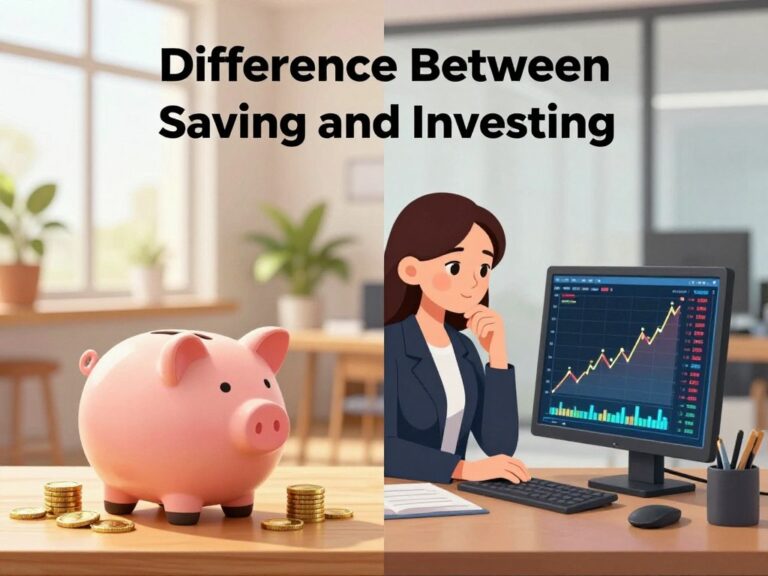
Understanding the Difference Between Saving and Investing is the first step toward steady financial health. This short intro helps readers learn how saving and investing shape their money plans today.
Saving usually means using a safe account for short-term needs or emergency funds. Investing puts money into stocks, bonds, or funds to grow over time. Each choice ties to goals, time horizon, interest, and risk.
Knowing when to use a savings account versus an investment plan helps people balance immediate needs with future aspirations. The guide that follows will explain how to manage risk, track interest, and allocate money to meet real goals.
Understanding the Difference Between Saving and Investing
Recognizing how savings accounts differ from market investments can guide practical money decisions. This helps people pick the right tool for short-term needs or long-term goals.
Saving keeps cash safe in an account with low risk and modest interest. Investing puts money into stocks, bonds, or funds that may grow but also fluctuate in value.
Both strategies can work together. One funds emergencies and near-term plans. The other aims for higher growth over time.
- Safety: savings accounts offer security and liquidity.
- Growth: investments seek higher returns but accept risk.
- Time horizon: short-term uses savings; long-term uses investment vehicles.
| Feature | Savings | Investments |
|---|---|---|
| Primary aim | Protect money | Grow money |
| Risk | Low | Higher |
| Best for | Emergency funds | Retirement, wealth building |
The Role of Savings in Your Financial Plan
A solid savings plan gives people a reliable cushion for life’s short-term surprises. It helps keep money available for urgent needs and near-term goals.
Benefits of Liquidity
High liquidity means funds are easy to access. A savings account lets someone withdraw cash quickly for an emergency or an upcoming bill.
Keeping a liquid fund reduces the risk of selling investments during a market dip. It also keeps monthly plans on track with steady cash flow.
FDIC Insurance and Safety
The Federal Deposit Insurance Corporation insures deposits up to $250,000 per depositor at member banks. This protection makes savings accounts a secure place for emergency money.
While savings often earn a lower interest rate than market options, the principal remains protected. That stable return supports short-term planning without added risk.
- Maintain three to six months of household income in an emergency fund.
- Use insured accounts for deposits earmarked for bills and urgent needs.
- Choose a savings account when prioritizing liquidity over higher returns.
| Feature | Liquidity | Safety | Best use |
|---|---|---|---|
| Savings account | High | FDIC insured | Emergency fund, short-term goals |
| Investment account | Lower | Market risk | Long-term growth, retirement |
| Checking account | Very high | FDIC insured | Daily bills, immediate needs |
How Investing Works to Build Wealth
Investing turns spare cash into working assets that aim to grow over many years. It pairs a plan with a time horizon and an acceptance of market risk.
Common Investment Vehicles
Investing involves buying assets like stocks, bonds, mutual funds, and exchange-traded funds. Each product has different risk, tax treatment, and potential returns.
Stocks offer growth but can swing in value. Bonds provide income and usually lower volatility. Funds bundle securities to simplify diversification.
The Power of Compounding
Compounding lets earnings generate their own earnings. Over years, this power can turn modest contributions into a sizable fund.
Starting early helps investors use time to reduce the impact of short-term market moves. Reinvesting dividends and interest accelerates value growth.
Retirement Account Options
Accounts such as a 401(k) or IRA give tax benefits that boost long-term growth. Employer-sponsored plans often include matching contributions.
Choosing the right account depends on goals, tax status, and the types of funds or stocks available in the plan.
| Type | Risk | Potential Return | Tax Feature |
|---|---|---|---|
| Stocks | High | High long-term | Taxed on sale; qualified dividends taxed lower |
| Bonds | Moderate | Moderate income | Interest taxed as ordinary income; municipal bonds may be tax-free |
| Mutual funds / ETFs | Variable | Depends on holdings | Tax efficiency varies; index funds often lower turn-over |
| Retirement accounts | Variable | Tax-advantaged growth | Pre-tax or tax-free withdrawals depending on account |
Key Factors Influencing Your Financial Decisions
Choosing the right path for money requires weighing time, taxes, and tolerance for market swings.
If the horizon is under five years, a liquid account or savings option often makes more sense. A 5–10 year window is a common threshold for prioritizing growth through investment products.
Before investing, a fully funded emergency fund protects against sudden needs and reduces the chance of selling stocks during a downturn. This fund sits in an insured deposit or high-yield account for easy access.
Inflation and tax rules affect real return. Low interest in a savings account can erode buying power over years. Investors should compare tax-advantaged retirement accounts with taxable securities when planning.
For many, a balanced way is best: hold liquid money for short-term goals while placing a portion into bonds, stocks, or diversified funds for long-term growth. Professional advice helps tailor the mix to risk tolerance and goals.
| Factor | What to check | Suggested action |
|---|---|---|
| Time horizon | Years until goal | Short: accounts; Long: investments |
| Liquidity needs | Emergency and near-term needs | Keep 3–6 month fund in savings |
| Tax & inflation | After-tax return and buying power | Use retirement accounts and diversified securities |
Managing Risk and Market Volatility
When markets swing, a clear strategy helps investors protect money and stay focused on long-term goals. Risk cannot be removed, but it can be managed with choices that limit losses and keep potential for returns.
Diversification Strategies
Diversification spreads money across different assets so one company or product failure has less impact. Mixing stocks, bonds, and other securities reduces concentration risk.
Holding a mix of funds and accounts can smooth returns over a year or longer. A separate emergency fund in a savings account prevents forced sales during market drops.
- Use a mix of stocks and bonds to balance growth and stability.
- Include funds that cover different sectors and company sizes.
- Keep an insured account for emergencies to avoid liquidating investments at a low point.
| Strategy | Primary Benefit | When to use | Key note |
|---|---|---|---|
| Asset mix (stocks, bonds) | Reduce portfolio volatility | Long-term goals | Adjust by age and risk tolerance |
| Funds & ETFs | Diversify across many companies | Building core holdings | Lower single-company exposure |
| Separate emergency account | Protect principal with guarantee | Short-term needs | Prevents forced selling |
The Importance of Time Horizons
Longer horizons let compound returns do most of the work for investors.
Time is the single greatest factor in building wealth. Over years, small contributions and reinvested returns can grow value far beyond the original amount.
If a goal is under five years, it is generally safer to keep money in a savings account. That protects principal and keeps funds liquid for near-term needs.
For long-term goals like retirement, investors can accept more risk to chase higher market returns. Stocks and selected funds tend to offer greater growth, while bonds add stability.
- Short term (under 5 years): prioritize savings and low volatility assets.
- Medium term (5–10 years): mix bonds and stocks to balance rate and risk.
- Long term (10+ years): emphasize stocks and growth-oriented investments for higher returns.
| Horizon | Primary use | Typical assets |
|---|---|---|
| Short (0–5 years) | Preserve money | Savings, cash funds |
| Medium (5–10 years) | Balance growth | Bonds, mixed funds |
| Long (10+ years) | Grow value | Stocks, equity funds |
Building a Balanced Financial Strategy
Combining an emergency cushion with steady contributions to retirement accounts builds lasting financial resilience.
The core idea is simple: keep a savings account for urgent needs while directing regular deposits into investment accounts for long-term goals.
Diversify assets across stocks, bonds, and funds to reduce risk and protect money from inflation while seeking market return potential.
- Automate transfers to a savings account and to retirement or taxable investment accounts.
- Review the mix of products and securities every year or after major life events.
- Seek professional advice to pick the right account types, tax-aware options, and bonds or stocks for goals.
| Need | Best option | Why |
|---|---|---|
| Short-term emergency | Savings account | Liquidity and FDIC deposit protection |
| Retirement growth | Retirement accounts | Tax benefits and long-term return potential |
| Inflation hedge | Stocks & bonds mix | Growth potential with risk management |
Conclusion
Smart financial habits pair liquid reserves with growth assets to protect today and build tomorrow.
A savings account gives safety and easy access while investing aims for higher returns to outpace inflation over time.
Keep an emergency fund so investors avoid selling stocks or bonds during market drops. That reduces risk and preserves value.
Balance money across savings, funds, and retirement accounts. Periodic reviews and professional advice help tailor the plan to personal goals and tax rules.
Start by checking current accounts and taking one small step today toward a more secure financial future.