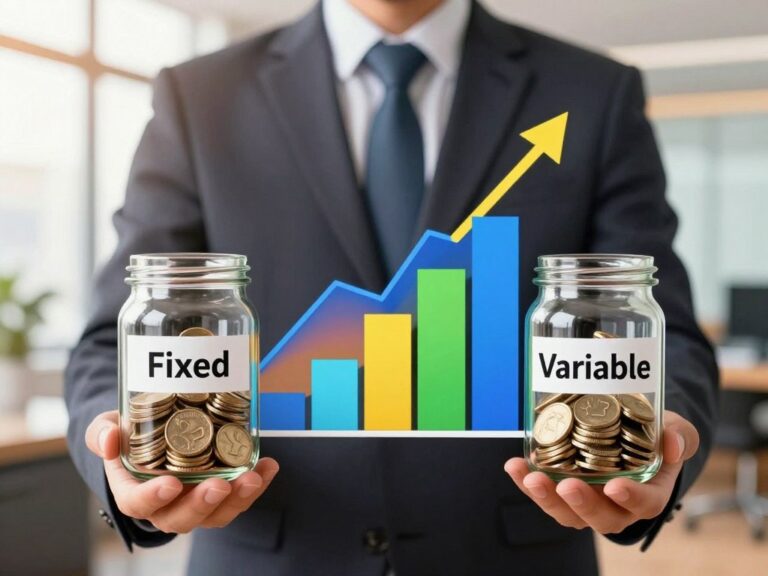
The terms describe how a loan’s charge is set over time. One option keeps the monthly amount steady. The other can move with the market and change a borrower’s payment.
Understanding the difference helps anyone in the United States make smarter borrowing choices. Choosing the right structure affects long-term costs and monthly budget planning. Lenders often adjust their offers based on current market signals, so comparison matters.
This guide explains how each setup works and when each can make sense. It looks at how a changing rate may alter payments and how a steady option can bring predictability. Readers will get clear context to weigh loans and plan for future finances.
Understanding Fixed vs Variable Interest Rates
Borrowers choose between a locked-in payment plan and one that can shift with economic signals. A set option keeps the monthly payment steady for the term. That predictability helps with budgeting and planning for long loans like a mortgage.
By contrast, a variable interest rate tracks market benchmarks and may move up or down. When benchmarks climb, the buyer faces higher monthly costs and a greater risk of paying more over time.
Many loans and credit cards let borrowers pick either approach. Which makes sense depends on comfort with changes, savings goals, and plans for the home or other purchases.
- Stability favors a fixed rate and steady payments.
- Flexibility can offer lower initial costs with a changing option.
- Evaluate risk tolerance before locking a long-term loan.
| Feature | Set option | Changing option |
|---|---|---|
| Payment predictability | High | Variable |
| Response to market | None | Tracks benchmarks |
| Common products | Fixed-rate mortgage, fixed loans | Credit cards, adjustable mortgages |
| Best for | Budget-focused borrowers | Those seeking potential savings |
Mechanics of Fixed Rate Loans
Some loans lock the borrowing cost so monthly bills stay steady from start to finish. That design makes planning easier for families and individuals with long repayment periods.
Common Types of Fixed Loans
Many home mortgages use a fixed interest rate to keep monthly payment amounts consistent through the term. Ray Jones, Vice President of Loan Programs at South Carolina Student Loan, notes that a fixed loan maintains the same rate for the life of the loan.
Federal Direct student loans are another example where the government sets the interest annually. Most credit products that promise steady payments fall into this group.
Benefits of Payment Predictability
Predictable payments help borrowers budget and avoid surprises when rates rise. When interest rates rise, a locked percentage shields the borrower from higher borrowing costs.
Still, fixed loans may include fees. It is wise to calculate total cost over the life of the loan before deciding.
| Product | Typical term | Payment predictability | Common borrower use |
|---|---|---|---|
| Fixed-rate mortgage | 15–30 years | High | Home purchase |
| Federal Direct student loan | 10–25 years | High | College borrowing |
| Fixed personal loan | 2–7 years | High | Debt consolidation |
Dynamics of Variable Interest Rates
Many loans link their borrowing cost to an outside benchmark, so monthly bills can move with the economy.
How Market Benchmarks Influence Rates
Most lenders tie a variable rate to an index such as the prime rate or federal funds rate. When that index shifts, the loan’s cost often follows soon after.
Risks of Rate Fluctuations
If market interest rates rise, a borrower’s monthly payment can increase. That change may strain a tight budget and raise the total paid over the life of a loan.
Potential for Initial Savings
Some products, like an adjustable-rate mortgage or variable personal loan, offer lower starting payments. This can help short-term homeowners or those who plan to refinance.
- Benchmarks drive movement in variable interest.
- Lower initial payments can mean short-term savings.
- Rising market rates create budget and long-term cost risk.
Key Factors for Choosing the Right Loan
Choosing the right loan starts with a clear look at how much uncertainty a borrower can handle. Assessing personal finances and future plans helps narrow choices between a steady percentage and one that can move with the market.
Assessing Your Personal Risk Tolerance
Begin by listing monthly expenses and the cash cushion available for surprises. If a rise in interest rates would strain the budget, a locked option may ease stress.
- Shorter term loans reduce exposure to changing indexes and may favor a shifting rate for lower early costs.
- Citi and other lenders require solid credit and income history to set a final rate for personal loans.
- Use a loan calculator to model how different numbers affect monthly payments over time.
| Factor | When to pick | Key check |
|---|---|---|
| Budget stability | Need steady monthly payments | Emergency fund size |
| Time horizon | Short term | Term length |
| Costs | Chasing savings | Compare fees and prepayment penalties |
Compare pros and cons, check for prepayment fees, and choose the option that fits the borrower’s situation and long-term goals.
How Economic Conditions Affect Interest Rates
Interest rates do not exist in isolation. Economic conditions, inflation trends, and central bank decisions often influence the rates lenders offer on mortgages, personal loans, and other forms of credit.
During periods of rising inflation, lenders may increase rates to offset higher borrowing costs. This can make variable-rate loans more expensive over time, while borrowers with fixed rates remain protected from those increases.
When economic conditions improve and rates fall, borrowers with variable loans may benefit from lower monthly payments. Those with fixed-rate loans, however, continue paying the agreed rate unless they refinance.
- Inflation often pushes interest rates higher.
- Economic slowdowns may lead to lower borrowing costs.
- Variable-rate borrowers are more exposed to market changes.
- Fixed-rate borrowers gain protection against rate increases.
How Loan Terms Influence Rate Choices
The length of a loan can play a major role in determining whether a fixed or variable rate makes more sense. Borrowers planning to keep a loan for many years often value the stability of fixed payments, especially when budgeting for major expenses.
Shorter loan terms may make variable rates more attractive because there is less time for market fluctuations to significantly affect overall borrowing costs. In some cases, the lower initial rate can create meaningful savings.
Before selecting a loan, compare how different repayment periods affect monthly costs, total interest, and flexibility. Understanding the relationship between term length and interest structure can help borrowers choose a solution that supports both current needs and future financial goals.
| Loan Scenario | Often Preferred Option |
|---|---|
| Long-term mortgage | Fixed rate for payment stability |
| Short-term borrowing | Variable rate for potential savings |
| Tight monthly budget | Fixed rate for predictability |
| Expecting lower future rates | Variable rate may offer advantages |
Conclusion
Deciding how to borrow starts with matching loan features to real-life plans. Review your budget, timeline, and how much risk you can accept before choosing a path.
Set options give steady monthly payments, while a variable interest rate can offer lower early costs. Monitor the market and your credit profile so the choice stays aligned with goals over the term.
Use calculators, compare offers, and revisit the plan if conditions change. With a clear view of costs and savings, borrowers can select the loan that fits their money situation and long-term aims.