
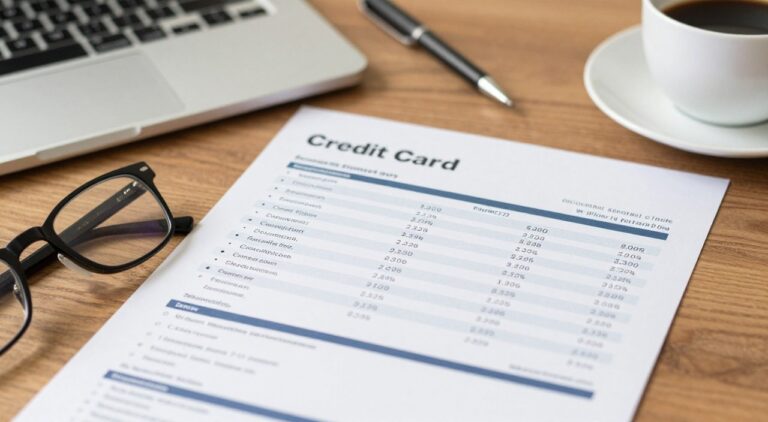
Understanding a billing summary helps people track purchases, payments, and fees each month. This short introduction explains why checking card statements matters and what to watch for.
Your card issuer sends a monthly statement that lists activity, interest, and charges. By reviewing the date, amount, and transactions, they can spot errors or fraud early.
Equifax offers free credit reports that pair well with regular statement reviews. Together, these tools help people manage credit, avoid costly mistakes, and keep financial records accurate.
Understanding the Basics of a Credit Card Statement
A clear card summary shows every purchase, payment, fee, and interest charge from the last billing cycle.
Most card statements include basic account information such as the account holder’s name, address, and the billing dates. They list the opening balance, any payments received, and new purchases or cash advances.
The account activity section breaks down totals. It shows the previous balance, total payments, new charges, and the amount due. This helps users track what they owe and when a payment must post.
There is also a fees and interest area. This explains finance charges, late fees, and other costs applied by the card issuer. Seeing those numbers makes borrowing costs clearer.
| Section | What it shows | Why it matters |
|---|---|---|
| Account details | Name, account number, billing dates | Confirms identity and cycle timing |
| Activity summary | Previous balance, payments, new transactions | Tracks monthly changes to the balance |
| Fees & interest | Interest charges, late fees, other charges | Shows cost of carrying a balance |
| Payment details | Amount due, due date, minimum payment | Prevents late payments and penalties |
How to Read a Credit Card Statement Effectively
Begin with a quick scan of the header to confirm account ownership and issuer contact details. This step helps avoid reviewing the wrong document.
Locating Account Details
Check the account name, partial account number, and the billing address. Verify the statement date and the card issuer phone number for disputes.
Understanding Billing Cycles
The billing cycle shows the period when transactions post. It usually covers about one month and sets the due date for payment.
- Compare the list of purchases and payments with personal records.
- Note any cash advances and interest-bearing balances.
- Spot fees or unexpected charges and flag them for follow-up.
| Area | What to check | Why it matters |
|---|---|---|
| Header | Account name, last 4 digits, issuer contact | Confirms the statement belongs to the account holder |
| Cycle dates | Statement date, billing period, due date | Determines when payments post and interest accrues |
| Activity list | Purchases, payments, credits, cash advances | Helps reconcile transactions and spot errors |
Decoding Your Account Activity Summary
The account activity summary gives a snapshot of what posted during the billing cycle, including payments and new charges. It lists the previous balance and the total payments applied that month.
This section also shows the credit limit and available credit so the card holder knows how much room remains. Tracking purchases, balance transfers, and cash advances here explains how each entry affects the current balance.
Fees and interest charges appear in the summary as separate line items. Seeing those figures helps the user spot unexpected costs and compare borrowing expenses across statements.
- Quickly verify the opening and closing balance.
- Confirm payments posted and the posted date.
- Note any fees, interest, or cash advances that raised the balance.
| Summary item | What it shows | Why it matters |
|---|---|---|
| Previous balance | Amount carried from last cycle | Basis for current interest and total owed |
| New purchases | Total of posted purchases this month | Shows spending that increased the balance |
| Payments & credits | All payments and refunds applied | Reduces balance and affects next due amount |
| Credit limit / available credit | Maximum line and unused portion | Helps manage utilization and avoid overlimit |
Navigating Payment Information and Due Dates
Finding the payment information early gives the account holder time to act. The payment area on a card statement lists key facts: the amount due, the minimum payment, and the exact payment due date.
Statements normally arrive about 21 days before the next payment due date. That window lets the user check the balance, confirm transactions, and set up a payment without rushing.
The Importance of Payment Deadlines
Missing a payment due date can trigger late fees and may harm credit. It can also increase interest charges and raise the total amount owed over the month.
Verifying the minimum payment prevents penalties and keeps the account in good standing. Paying more than the minimum reduces interest and lowers the balance faster.
- Review the payment information immediately after opening the statement.
- Note the due date and set reminders at least a week ahead.
- Confirm the listed amount matches personal records before sending payment.
| Item | What it shows | Why it matters |
|---|---|---|
| Amount due | Total balance required by the due date | Clears the account and avoids new interest |
| Minimum payment | Smallest acceptable payment this month | Prevents late fees and keeps account active |
| Payment due date | Deadline for posted payment | Missed dates can hurt credit and incur fees |
Analyzing Your Transaction History
A careful review of the transaction list reveals where money moved and flags anything unusual. This section helps the reader confirm authorized purchases, track balance transfers, and monitor cash advances that affect the account balance.
Verifying Authorized Purchases
They should compare each posted purchase with receipts and bank alerts. If an amount looks wrong or a merchant is unfamiliar, report it right away.
Tracking Balance Transfers
Balance transfers often carry special fees and interest rates. Note the posted date, the transferred amount, and any fees listed on the statement so the true cost is clear.
Monitoring Cash Advances
Cash advances typically start accruing interest immediately and include fees. Track the cash advance amount and how it raised the overall balance.
- Review transactions line by line for mismatches.
- Flag unauthorized items and contact the issuer quickly.
- Record dates and amounts for disputed entries.
| Transaction type | What to check | Why it matters |
|---|---|---|
| Purchases | Merchant name, date, amount | Confirms authorized spending |
| Balance transfers | Transfer amount, fee, posted date | Shows cost and impact on available credit |
| Cash advances | Amount, fees, interest start | Increases balance and interest charges |
Identifying Interest Charges and Fees
A close look at interest details reveals how much carrying a balance really costs. The section on interest charges and fees lists costs tied to purchases, balance transfers, and cash advances.
The statement often shows separate lines for each type of charge. It may also include year-to-date totals so the account holder can see cumulative fees and interest paid this year.
Federal law requires the card issuer to give at least 45 days’ notice before changing interest rates or other terms. That date appears in billing notices or a separate disclosure.
- Verify the interest rates applied to purchases and cash advances.
- Compare posted fees with the account agreement when an unexpected amount appears.
- Use year-to-date totals to track how much interest has been paid.
| Type | When it posts | Typical fee | Why it matters |
|---|---|---|---|
| Purchases interest | After grace period if balance carries | Variable APR on balance | Raises monthly amount owed |
| Balance transfer fee | At transfer posting | 1–5% of transferred amount | Increases transferred balance |
| Cash advance | At withdrawal posting | Flat fee plus immediate interest | Costs more and starts interest right away |
| Late fee | After missed due date | Fixed penalty | Can add to balance and harm credit |
Recognizing Late Payment and Minimum Payment Warnings
Warnings on a statement highlight the consequences of not paying a balance in full. They appear near the payment area and use plain language to explain fees and changes in rates.
These notices explain penalty interest rates, late fees, and how a missed payment can affect credit. The messages also often show a debt payoff chart. That chart makes the cost of paying only the minimum payment easy to see.
Consequences of Paying Only the Minimum
Paying the minimum extends the time it takes to clear a balance. It also increases the total interest and fees paid over time.
- Higher interest: outstanding balances accrue interest at regular or penalty rates.
- Longer payoff: small payments slow principal reduction and raise total cost.
- Possible penalties: missed payment due date may trigger late fees and rate changes.
| Warning type | What it shows | Suggested action |
|---|---|---|
| Minimum payment notice | Amount required and impact on payoff | Pay more than the minimum when possible |
| Late payment alert | Fees, new rates, and missed date | Submit payment promptly and contact the issuer |
| Debt payoff example | Chart of time and interest at current rates | Increase monthly payment to save on interest |
Distinguishing Between Statement and Current Balances
Knowing which figure to use helps a card holder avoid surprise charges and extra cost. The statement balance shows what was owed at the closing date for that billing cycle.
The current balance reflects real-time activity. It includes purchases, refunds, and payments that posted after the closing date.
Paying the statement balance by the payment due date prevents interest on new purchases. Only the posted statement amount must be paid by that date to keep the grace period.
- Current balance often equals or exceeds the statement balance when new charges post.
- Transactions after the closing date roll into the next billing cycle and affect the next payment.
- Distinguishing these totals helps manage available credit and avoid missed minimum payment notices.
| Figure | What it shows | Why it matters |
|---|---|---|
| Statement balance | Amount due at cycle close | Use this for on-time payment by the payment due date |
| Current balance | Live total with recent postings | Reflects real credit use and available card room |
| Effect on costs | Interest depends on unpaid statement amount | Paying in full avoids interest charges |
Best Practices for Storing and Managing Your Records
Organized records protect identity and make resolving billing errors much faster. A consistent habit of saving recent documents makes disputes and audits less stressful.
Digital Versus Paper Statements
Digital copies are convenient and searchable through the issuer’s portal. They reduce clutter and are often available for several years.
Keep short-term paper copies for at least 60 days. Retain them up to 90 days when disputing an error on card statements.
Retention Periods for Tax Purposes
For tax-deductible purchases, save relevant credit card statements for three to six years. That range covers typical IRS audit windows.
Always shred old statements with account numbers before disposal. Secure storage limits identity theft and preserves clear financial records for cards and taxes.
- Store digital backups and enable multi-factor access on accounts.
- Keep paper copies only as long as needed, then shred securely.
| Record | Keep for | Why | Action |
|---|---|---|---|
| General card statements | 60 days | Resolve routine disputes | Scan then shred |
| Disputed documents | 90 days | Provide proof while issue is open | Keep originals secure |
| Tax receipts and statements | 3–6 years | Support deductible claims in audits | Archive digitally and physically |
| Online access | Issuer-dependent (years) | Long-term reference | Download periodic backups |
Conclusion
Consistent monthly checks build better financial control and reduce surprises. A short habit of scanning each statement helps catch errors and spot unusual activity early.
They should note the minimum payment and the exact payment due so missed deadlines do not trigger fees. Mark the due date on a calendar and schedule reminders at least a week ahead.
Knowing the difference between the statement balance and current balance guides smarter budgeting. With these simple steps, readers can protect credit, lower costs, and make clearer choices about card use and payment.