
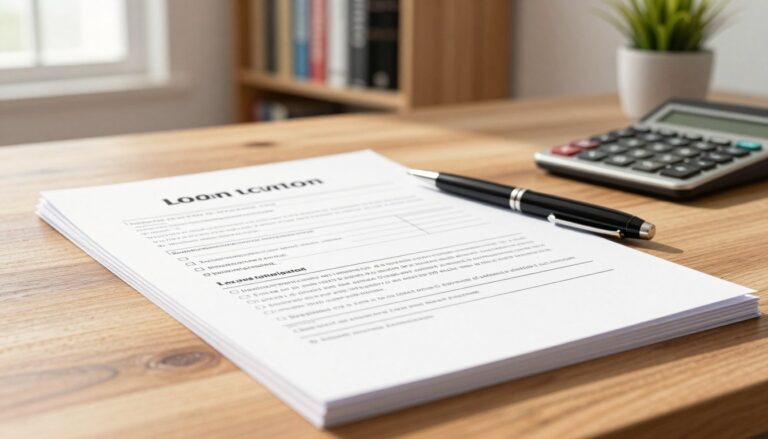
Most borrowers find that lenders require a core set of paperwork to verify identity, income, bank account and address. Gathering these items before applying speeds the review and can shorten funding time.
Typical checks include proof of income, recent tax returns and statements from the account used for payments. Some lenders ask about credit score, monthly debt and the amount and purpose of the request.
When collateral is involved, documentation to show ownership and value may be needed. For unsecured personal loans, income and identity verification are often the deciding factors.
Applicants should make sure names, contact details and Social Security numbers are accurate to avoid delays. If questions arise, contacting the bank or lender for assistance helps compile the right paperwork and move the process along.
Essential Loan Application Documents for Borrowers
To speed approval, borrowers should gather common records that verify identity, pay, and account information. Having these items ready reduces back-and-forth and shortens review time.
All lenders require a completed application form; local banks or credit unions often let applicants finish this step in person with a representative. Applicants should bring proof of income, a valid ID, and a current utility bill or similar proof of address.
- Proof of income such as recent paystubs or tax summaries to confirm repayment ability.
- Photo ID and proof of address to verify residency and identity.
- Bank account information for fund deposit and payment setup.
Whether borrowing for personal or business purposes, the lender will review financial information, credit history and any collateral details. Organizing loan documents before you apply personal helps answer lender questions quickly and improves the odds of approval.
For definitions of common terms and to prepare better, see loan terminology explained.
Verifying Your Identity and Residency
Lenders rely on clear identity and address proof to confirm who a borrower is and where they live. Verifying this information helps protect both parties and keeps the review compliant with federal rules like TILA.
Proof of Identity
Most lenders ask for two forms of ID. Acceptable examples include a passport, driver’s license, or birth certificate.
Having a secondary photo ID or a government-issued card speeds verification. A recent credit report or bank statement can also support identity checks.
Proof of Address
To confirm residency, applicants should provide a recent utility bill, lease or rental agreement, or a mortgage statement.
If someone has moved recently, lenders may request prior address history. Maintaining accurate tax records and bank statements makes this step smoother.
- Two forms of identification are typically required, such as a passport and a driver’s license.
- A utility bill, lease, or mortgage statement usually serves as proof of address.
- Bank statements or a credit report may be requested to verify financial history and current address.
Proving Income and Employment Stability
Showing consistent earnings and employer details reduces friction during the underwriting process.
Standard Employment Verification
Employed borrowers usually confirm income with pay stubs, W-2s, 1099s, and recent tax returns. Lenders also accept bank statements that show direct deposits.
Providing an employer phone number and manager contact speeds phone verification when needed.
Self-Employment Documentation
Self-employed applicants should supply two years of tax returns and bank statements to show steady business receipts. Profit-and-loss summaries from an accountant help if income varies.
Bank Account Access
Many lenders ask to link a bank account for secure, read-only access. This lets the lender verify cash flow without taking control of funds.
If a borrower opts out, the lender may request micro-deposits or official statements instead.
- Income records influence terms, interest, and maximum amount a borrower may receive.
- Well-organized bank statements and tax returns speed the process and lower follow-up requests.
| Verification Type | Usual Items | Typical Timeframe |
|---|---|---|
| Wage earner | Pay stubs, W-2s, bank statements | 1–3 business days |
| Self-employed | 2 years tax returns, bank statements, P&L | 3–7 business days |
| Account access | Read-only linking or micro-deposits | Same day to 2 days |
Strategies to Improve Your Approval Odds
Improving financial signals — like credit history and debt-to-income — helps borrowers present stronger cases to lenders.
They should check their credit score and dispute errors under the Fair Credit Reporting Act (FCRA). The FCRA protects the accuracy and privacy of credit information used by a lender.
Lowering debt and boosting income stability raises the likelihood of approval. Paying down balances reduces the debt-to-income ratio and often improves credit quickly.
Managing Debt and Credit
- Review the credit report for mistakes and correct them before an application.
- Pay down high-interest balances to cut monthly payments and improve the DTI ratio.
- Consider collateral or a cosigner if personal loans are hard to secure.
- Avoid multiple credit checks; too many inquiries can lower the score temporarily.
- Use a personal loan calculator to model interest and monthly payments before deciding.
| Action | Expected Impact | Timeframe |
|---|---|---|
| Dispute report errors | Restores accurate score used by lenders | 30–45 days |
| Pay down credit balances | Lower debt ratio, higher approval odds | 1–6 months |
| Add collateral or cosigner | May secure higher amount or better rate | Same day to 2 weeks |
Conclusion
Being organized with your proof of income and identity makes the final review faster and less stressful. Gather tax returns, bank statements and utility bills so the lender can verify information quickly.
Make sure files are legible and sorted by type. A tidy set of loan documents need reduces back-and-forth and speeds approval.
Keep an eye on credit score, pay down debt, and understand interest and payment terms to secure better offers for a personal loan. If questions arise, contact the bank or lender for assistance so the process moves smoothly.